

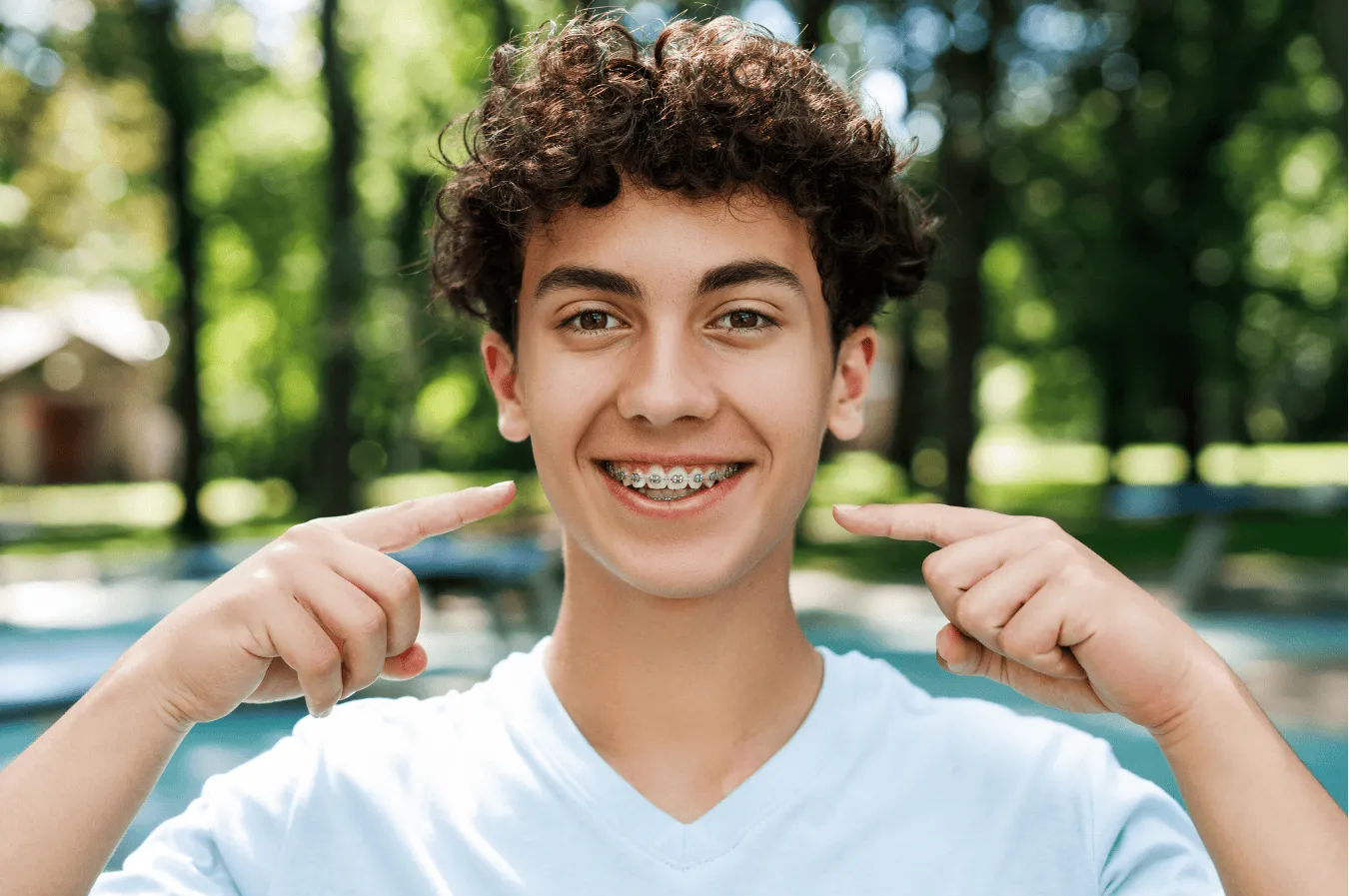
Yes, you can use mouthwash with braces, and in most cases you should. But the aisle at the drugstore is full of bottles that do very different things, and a few of them will actively work against you while you are in treatment. Choosing the wrong one is a common and completely avoidable mistake.
Here is what mouthwash can and cannot do for a mouth with brackets and wires in it, which type to reach for, and the habits that matter more than any rinse.
Start here: mouthwash does not replace brushing
This is the point that gets lost. A rinse moves liquid over surfaces. It does not physically remove the sticky bacterial film that builds up around brackets, and that film is what causes decalcification, gum inflammation, and the white marks patients notice when their braces come off.
Plaque has to be disrupted mechanically, with a brush and with something that goes between the teeth. Mouthwash is a useful supplement that reaches places your brush misses and delivers fluoride to the enamel around each bracket. Treat it as the last step, not the whole routine.
The types, and which one you want
Fluoride rinse: the one most orthodontic patients should be using. Braces create dozens of new plaque traps, and enamel around brackets loses minerals faster than enamel anywhere else in your mouth. A daily fluoride rinse puts fluoride directly onto those surfaces, where it helps remineralize early damage before it becomes a permanent white scar or a cavity. Look for sodium fluoride on the label, typically at 0.05 percent for daily use. This is the single most valuable rinse during treatment.
Antiseptic and antibacterial rinses. These target the bacteria that cause gum inflammation. If your gums are puffy, red, or bleed when you brush, which is extremely common in the first months of treatment, an antibacterial rinse can help bring that under control while you improve your brushing technique. Chlorhexidine is the prescription-strength version and is genuinely effective, but it stains teeth brown with extended use and is meant for short courses under supervision. Over-the-counter antiseptic rinses are milder and suitable for longer use.
Cosmetic rinses. The ones that promise fresh breath and nothing else. They mask odor for twenty minutes and contribute nothing to the health of your teeth. Harmless, but do not mistake them for protection.
Whitening rinses: skip these until your braces are off. This matters. Whitening agents act on exposed enamel. The enamel underneath your brackets is not exposed. If you whiten during treatment, you can end up with a lighter shade everywhere except a series of rectangles where the brackets sat. Wait until debonding, let the enamel settle for a few weeks, then discuss whitening with your orthodontist or dentist.
What about alcohol?
Many traditional mouthwashes contain a significant amount of alcohol. It is not going to damage your braces, but it dries out the mouth, and a dry mouth is a higher-risk mouth. Saliva is your natural defense: it buffers acid, washes away food debris, and carries the minerals that repair early enamel damage. Less saliva means more decay risk, which is the opposite of what you want with brackets bonded to your teeth.
Alcohol-based rinses also sting, and during the first weeks of treatment, when your cheeks and lips are adjusting, that sting is enough to make most people quit rinsing entirely. Alcohol-free formulations are widely available, work just as well, and are the sensible default for anyone in braces. They are also the only appropriate option for children and teenagers.
A routine that actually works
- Rinse with plain water first to loosen larger food debris caught around the brackets.
- Brush for two minutes with a fluoride toothpaste. Angle the bristles down toward the gumline above each bracket, then up from below, then brush the chewing surfaces. An interdental or proxy brush gets under the archwire where a regular brush cannot reach.
- Clean between your teeth with a floss threader, orthodontic floss, or a water flosser. Every night, without exception. This is where gum problems begin.
- Finish with a fluoride rinse. Swish for the time stated on the bottle, usually 60 seconds, spit, and then do not eat, drink, or rinse with water for 30 minutes. Rinsing it away immediately wastes the fluoride.
Doing the fluoride rinse at night is the most effective timing, because saliva flow drops while you sleep and the fluoride stays on the enamel longer.
Special situations
Mouth sores in the first weeks. A warm saltwater rinse, about half a teaspoon of salt in a cup of warm water, soothes irritated tissue better than any commercial product and costs nothing. Combine it with orthodontic wax over the bracket that is causing the problem.
Bleeding gums. This usually signals inflammation from plaque, not damage. Do not stop cleaning the area; clean it more carefully. Bleeding typically resolves within a week or two of consistent brushing and flossing. If it does not, tell us at your next visit.
Clear aligners instead of braces. A rinse is still useful, but the rule is that you take your aligners out first. Never rinse with the trays in, and never soak aligners in mouthwash. Colored rinses stain the plastic, and alcohol can cloud and weaken it. Clean aligners with a soft brush and cool water or a dedicated cleaning product.
Retainers after treatment. Same principle. Clean them separately with cool water and a soft brush. Hot water warps the plastic, and mouthwash is not a substitute for physically brushing the biofilm off.
Things to avoid
- Whitening rinses and whitening strips while brackets are bonded.
- Rinsing immediately after brushing with water, which washes away the fluoride from your toothpaste.
- Using a rinse instead of flossing because it feels like you have cleaned between the teeth. You have not.
- Long-term unsupervised use of prescription chlorhexidine, which stains.
- Sugary or highly acidic rinses and mouth sprays, which do the same damage as soda.
The short version
Use an alcohol-free daily fluoride rinse as the last step of a proper brushing and flossing routine. Add an antibacterial rinse temporarily if your gums are inflamed. Leave whitening products alone until your braces come off. And remember that no bottle compensates for skipped brushing; the patients whose teeth look best at debonding are the ones who were consistent, not the ones who bought the most products.
If you are not sure which rinse fits your situation, ask at your next adjustment and we will give you a specific recommendation. Our patient resources page also covers daily care during treatment, and if you are still deciding between appliances, our braces and Invisalign pages walk through the differences. Ready to get started? Schedule a free consultation at our Aurora office.